
Compost Branches & Twigs Without Shredder: Cow Urine + Hammer Method
If you’re like most of us growing food on terraces and balconies—whether in Delhi, Mumbai, New York, or California—you know the frustration all too well.
You diligently collect kitchen waste, dry leaves, and grass clippings for your compost pile. Yet that ever-growing mountain of pruned branches, twigs, and woody garden waste just sits there — stubborn, bulky, and refusing to break down for months or even years.
In my 14+ years of terrace gardening in Delhi, I have seen the same problem. Expensive shredders weren’t practical for small spaces or tight budgets.
Traditional methods felt too slow. That’s when I developed a simple, low-cost practical workaround that changed everything: the Hammer + Cow Urine + Trichoderma method.
Today, I turn branches and twigs into rich, usable compost in 4–12 weeks instead of 1–2 years.
This guide shares exactly what works on my own terrace and has worked for thousands of my YouTube community members. It perfectly complements my popular 2-3-4 Composting Method without competing with it.
Let’s turn your woody waste problem into black gold for your garden.
The Science of Woody Waste: Why Branches Refuse to Break Down
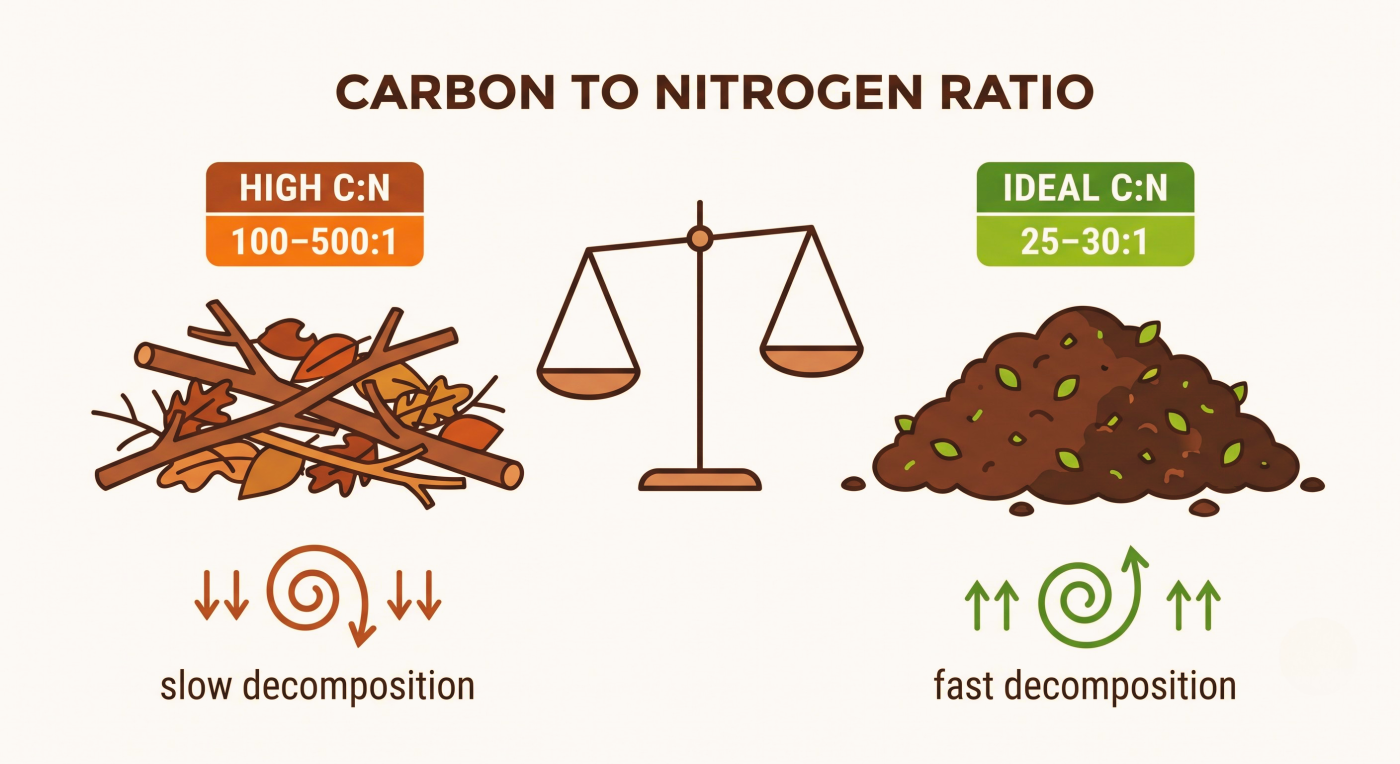
Woody materials like branches and twigs are rich in lignin and cellulose — tough, complex compounds that give plants structural strength. These are “browns” with extremely high Carbon-to-Nitrogen (C:N) ratios, often between 100:1 to 500:1 or more.
Microbes that do the composting work need a balanced diet. The ideal C:N ratio for fast composting is 25–30:1. When you add lots of woody waste without enough nitrogen, microbes “rob” nitrogen from the pile (or your soil) to break down the carbon. The result? A slow, cold pile that can take years.
Think of it this way: you have plenty of fuel (carbon from branches), but no spark (nitrogen) to ignite the decomposition fire. The microbes are there, but they can’t multiply fast enough to do the work.
Key insight from my experience: You must address two things simultaneously — increase surface area (physical prep) and supply nitrogen + powerful microbes (treatment). Do both, and decomposition accelerates dramatically.
Step 1: The Hammer Technique – Your Affordable Shredder Alternative
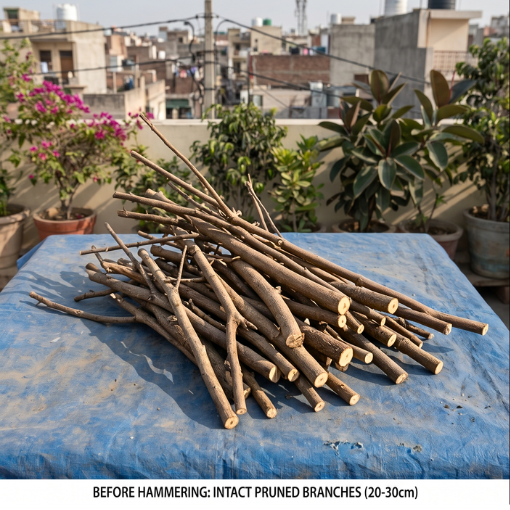
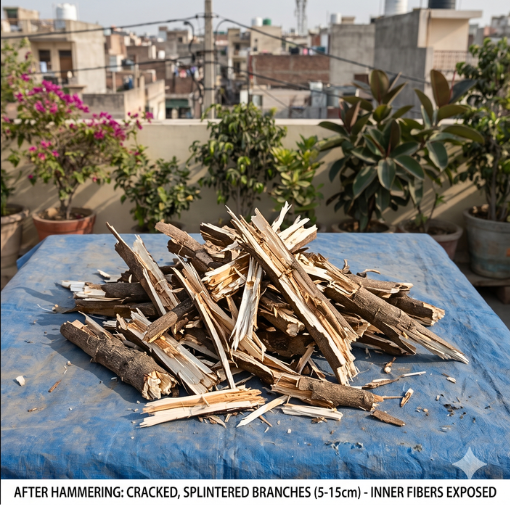
You don’t need a ₹15,000–30,000 ($200–$400) electric shredder. A simple heavy-duty hammer (or mallet) does 80% of the job on a home scale.
How to Hammer Twigs and Branches Effectively:
1. Collect fresh or semi-dry prunings (avoid completely dead, brittle wood if possible).
2. Spread them on a sturdy surface — old tarp, concrete floor, or wooden block.
3. Wear safety gloves and glasses.
4. Hammer along the length to crush and split the wood, aiming for pieces 5–15 cm (2–6 inches) long. Focus on cracking them open rather than turning them into dust.
5. For thicker branches (up to 3–4 cm / 1–1.5 inches diameter), hammer from multiple angles until they splinter.
Pro Tip: Do this in the morning when it’s cooler. One hour of hammering can process enough material for a full bin. Many of my students in India hire a daily wage laborer for bigger cleanups — still far cheaper than buying a shredder. In the USA or other countries, this is a great weekend workout that saves money and gym fees.
A 1–2 kg (2–4 lb) heavy claw hammer or rubber mallet. I’ve used the same one for years.
This step multiplies surface area, allowing microbes to attack much faster. The cracked-open wood exposes the inner fibers to nitrogen and microbial action—exactly what you need.
🛒 SnG Gardeners Recommend

As an Amazon Associate, I earn from qualifying purchases.
Step 2: The Nitrogen “Secret Sauce” – Cow Urine, Dung & Trichoderma
This is where the real magic happens. Pre-treating hammered wood with nitrogen
sources feeds the microbes and balances the C:N ratio
🌿 Cow Urine (diluted)
Speed: High
Cost (India): Free/Low
Best For: India daily use
Readily available, works great with Trichoderma
🌿 Cow Dung Slurry (Gobar)
Speed: High
Cost (India): Free/Low
Best For: India bulk piles
Adds beneficial microbes too
🍄 Trichoderma Powder
Speed: Very High
Cost (India): ₹200–500
Cost (USA): $10–$20
Best For: All regions
Produces enzymes that break tough lignin
⚠️ Urea (use sparingly)
Speed: Very High
Cost: Very Low
Best For: Quick nitrogen boost
Risk of overdose — use carefully
💧 Human Urine (diluted)
Speed: High
Cost: Free
Best For: International readers
Excellent nitrogen source, culturally acceptable in many regions
Cow Urine Method (My Go-To for India)
Dilute fresh cow urine 1:5 to 1:10 with water. Hammered twigs get thoroughly sprayed until moist but not dripping. Let them sit covered for 24–48 hours before layering.
In India, cow urine is easily available from local gaushalas (cow shelters) or dairy farms. It’s free or costs very little. For international readers where cow urine isn’t practical, skip to the Trichoderma or human urine method below.
Trichoderma Application (Science-Backed Accelerator for All Regions)
Trichoderma harzianum and viride produce cellulase and lignin-degrading enzymes. Studies show 30–50% faster composting of lignocellulosic materials, with better nutrient retention.
Practical Application:
• Mix 5–10g Trichoderma powder per liter of water (add a spoon of jaggery or molasses for activation).
• Spray on nitrogen-treated twigs.
• Or sprinkle dry powder (approx. 10g per kg material) between layers.
• Look for white mycelium growth within 5–14 days — a sign of success.
Pro Tip from India: Combine cow urine spray + Trichoderma. The urine provides quick nitrogen while Trichoderma handles the tough lignin. This duo works exceptionally well in our warm Indian climate (25–35°C / 77–95°F ideal).
For USA and other regions: Use diluted human urine (1:10 with water) or a commercial nitrogen source like blood meal, then apply Trichoderma. The science is the same regardless of your nitrogen source.
🛒 SnG Gardeners recommend

As an Amazon Associate, I earn from qualifying purchases.
Garden Sprayer
A good quality sprayer makes application easy and even. I’ve been using the same 2-liter hand pump sprayer for 3 years.
🛒 SnG Gardeners Recommend

As an Amazon Associate, I earn from qualifying purchases.

SnG Gardeners has 14+ years of hands-on home gardening experience growing food in containers and small spaces. He runs shashingautam.in and the YouTube channel "Shashi N Gautam Kitchen Gardeners" (163,000+ subscribers), where every technique and recommendation comes from real-world testing — not theory. When SnG writes about a method, it's one he's used, tracked, and would use again.
Essential Gardening Tips for Beginners: Complete Guide 2025
Complete step-by-step guide to urban container gardening, soil preparation, and growing fresh organic vegetables and fruits at home for beginner
High Yeild Quality Capsicum Seeds for Home Garden
Aug
Powdery Mildew Control
Apr
Pusa Plant Nursery – New Delhi
Jul
How to Grow Strawberries in Pots — Complete Guide for Home Gardeners
Aug
Yellowing of Leaves in Plants: The #1 Hidden Reason (Not Pests, Not Nutrients!)
Aug
Tips for growing vegetables from seeds at home
Nov
How to Grow Blueberries in Pots in India – Best Varieties, Chill Hours & Care Tips
Sep
Compost Branches & Twigs Without Shredder: Cow Urine + Hammer Method
Essential Gardening Tools for Beginners: Complete Guide 2025
Sep
Secret of Growing Bigger Strawberries -Video (Hindi)
Feb
Is Charcoal Good for Plants and Soil? The Complete Honest Answer
Jun
मिर्ची / चिली उगाए कैसे – ये 2 गलती कभी न करे
Jul
Complete Home Vegetable Gardening Course – Soil – The Foundation of Growth
Sep
White Bugs on Hibiscus? How to Get Rid of Mealybugs in 2 Simple Steps
Jun
A Beginner’s Guide to Buying the Perfect Grafted Mango Plant
Jul
Planting seedlings in containers
Sep